



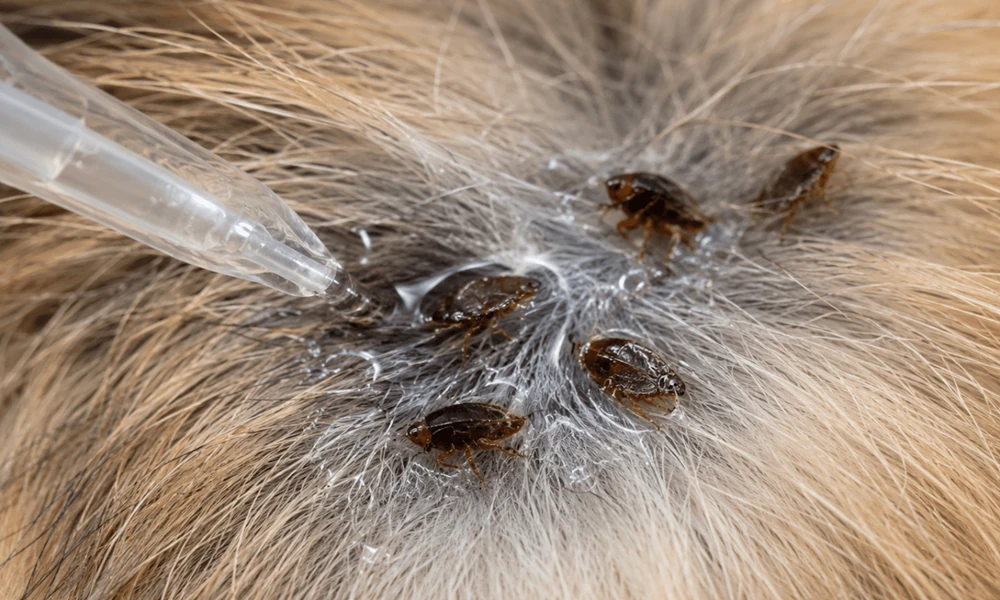
You treated the house. You bombed the carpets, washed the pet, and vacuumed everything in sight. It seemed to work for a day or two. Then, about a week later, the fleas came back, and there seemed to be more of them than before you started. It’s one of the most maddening experiences a pet owner can have, which drives a lot of people to assume the treatment failed or the products were junk. The explanation has nothing to do with a bad spray. It comes down to the flea life cycle, and understanding it is the key to effective flea control for homes.
The adult fleas jumping on your pet and biting your ankles represent a small fraction of the total problem. Most pest professionals put it at about five percent. The other ninety-five percent of the infestation is spread invisibly through your home as eggs, larvae, and pupae, tucked deep in carpet fibers, floor cracks, upholstery, and pet bedding. When you treat and kill the visible adults, you’ve knocked out that five percent. The remaining ninety-five percent is still there, still developing, and about to mature right on schedule.
The Pupal Stage Is the Real Culprit
Of the four flea life stages, the pupa ruins treatments. Inside a sticky, protective cocoon, the developing flea is shielded from nearly everything. That cocoon is essentially armor. You can treat a room thoroughly, and the pupae will sit there completely untouched, waiting.
In addition, pupae can stay dormant for days or weeks, then hatch in response to a trigger, which can be warmth, carbon dioxide, or the simple vibration of a footstep signaling that a host is nearby. This is why the problem often spikes about a week after treatment. The chemical wiped out the adults, but a fresh wave of fleas was maturing inside untouchable cocoons the whole time, and they hatch into a home that now seems freshly reinfested.
Why a Single Treatment Can’t Win
Once you understand the cocoon, the reason one-and-done treatments fail becomes clear. No product reaches every stage at once, because the pupae are effectively immune while they’re sealed inside. The only way to break an infestation is to keep pressure on the population as those protected pupae hatch into vulnerable adults over the following days and weeks. A blast, no matter how thorough, leaves the next generation waiting in the wings.
Effective flea control accounts for this timing. That usually means:
- Treatments spaced to catch newly emerged adults before they lay eggs.
- Thorough, repeated vacuuming, which both removes eggs and larvae and, helpfully, vibrates pupae into hatching early where treatment can reach them.
- Washing all pet bedding in hot water on a regular schedule.
- Keeping the pet on a veterinarian-recommended flea preventive so the animal stops being a mobile breeding site.
- Addressing the yard, since outdoor fleas continually reintroduce themselves indoors.
The Southern Climate Keeps It Going
Warmth and humidity speed the whole cycle along, which is why fleas are such a persistent problem across the humid Southern climate this region shares. Indoors, where the temperature stays comfortable year-round, the cycle never fully pauses the way a hard winter might slow it outdoors. That constant, climate-controlled environment lets fleas breed through every season.
This is exactly the situation where professional help changes the outcome. Palisade Pest Control can treat fleas with the life cycle in mind, timing return visits to intercept each emerging wave instead of relying on a single application. Their technicians understand that patience and proper timing beat brute force every time, and that expertise spares homeowners the demoralizing cycle of treating, celebrating, and watching the fleas roar back a week later.
So, if your flea problem worsened after you treated it, the products probably worked exactly as designed. What you witnessed was the next generation hatching out of cocoons nothing could touch. Beat fleas, and you beat the timeline. This takes a plan built around how these insects develop.